An abscess is a space that contains pus. It can occur anywhere in the body, and if it occurs around the tooth, it is known as a tooth abscess. There are a few types of tooth abscess (also known as dental abscess), and they are gingival abscess, periapical abscess, and periodontal abscess. Continue reading
Category Archives: Oral Care
What is Deep Gum and Root Cleaning?
Deep gum cleaning consists of scaling and root planing. Gum disease (gingivitis) if untreated can progress to more
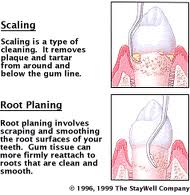
deep cleaning
serious periodontal disease (bacterial/viral proliferation which overwhelms the host immune response) causing destruction of the supporting tissues of the teeth and bone loss which are irreversible in nature. A periodontal pocket forms and harbors bacteria in large amounts. Deep scaling and root planning are the therapeutic procedures performed to heal your gums by removing the disease causing toxins. Scaling is the process of removing dental tartar from the teeth surfaces while root planning involves removing infected tooth structure (dentin and cementum) and smoothing the rough root surfaces of the teeth. The goal of active therapy is to remove as much subgingival debris as possible and disrupt/ the bacterial proliferation. Continue reading
How to Identify Symptoms of Trench Mouth
What is Trench Mouth?
Trench mouth is also known as Acute Necrotizing Ulcerative Gingivitis (ANUG) or Vincent’s infection. It is an acute
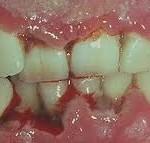
ANUG
 necrotizing inflammatory disease produced by endogenous infection where systemic changes, predispose the gingiva to invasion by bacteria. A recurring periodontal disease which results in necrosis and ulceration of the gums. It is a communicable infection of the respiratory tract and mouth extending to the tongue, palate, throat and pharynx. ANUG is a mixed bacterial infection with predominant groups of anaerobic bacteria, the fusiform, spirochetes and treponema. They present in large numbers in slough and necrotic tissue at surface of the ulcer and invade a small distance into underlying connective tissue, releasing toxins and enzymes. Trench mouth is a serious oral disease which causes severe pain and major discomfort. Inability to carry out good oral hygiene and poor nutritional status are the contributing factors of trench mouth. Other causes include smoking, increased physical and emotional stress, age, poverty and infections like HIV, AIDS and measles, malignant tumors and acute leukemia.
Home Cures for Pyria of the Gums
Pyria of the gums means bleeding of the gums, which does not occur in healthy gums. Bleeding of the gums can happen spontaneously, or after slight provokation, like after brushing the teeth. This usually occurs when there is inflammation of the gums, as the blood vessels beneath the gums will dilate and can rupture more easily. This is a serious indication that there is something wrong with your teeth, and should be seen by the dentist as soon as possible. Continue reading
Home Remedy for Inflamed Gums
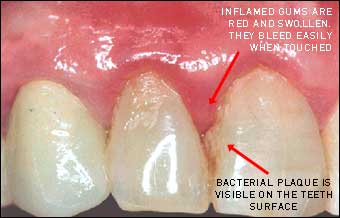
Picture 1: Inflammed gums, where plaque had accumulated.
Inflammed gums is also known to the dentists as gingivitis. It is a common problem, but not negligible as it can worsen. Therefore, it must be treated as promptly as possible. When there is inflammed gums, there can be bleeding from the gums either spontaneously or after a mild provokation, like after brushing the teeth. There can also be bad breath and redness of the gums, and the gums can also appear swollen.  Continue reading
Dental filling-What are the different options?
What is a dental filling?
A dental filling is a dental restorative material used to restore the function, integrity and morphology of missing tooth structure. The structural loss typically results from caries or external trauma. It is also lost intentionally during tooth preparation to improve the aesthetics or the physical integrity of the intended restorative material.
Dental fillings can be divided into three broad types: Continue reading
Foods you should avoid eating while wearing braces

© chadwellsmiles.com
Braces are fixed orthodontic appliance which is used to straighten your teeth, providing you a better smile and confidence.While wearing the appliance, you should avoid certain types of  foods which will stick between the wires and make it difficult to keep your mouth clean. These foods can also damage the braces. While wearing the orthodontic appliance, you should constantly clean your teeth and braces using the appropriate brushing method and instruments. Continue reading
Composite vs Amalgam
Composite resin and amalgam are the most commonly used filling materials in dentistry. Throughout the years, the content of both materials have been modified to improve the quality of the fillings.
Dental composite resins are types of synthetic resins. A composite material is a product which consists of two distinct phases normally formed by blending together components having different structures and properties.The purpose of this is to produce a material having properties which could not be achieved from any of the individual components alone. The two main components of composite filling materials are resin phase and the reinforcing filler. The resin gives the material the ability to be moulded at ambient temperature and polymerization achieved in a short time.Synthetic resins evolved as restorative materials since they were insoluble, aesthetic, and insensitive to dehydration and were inexpensive. It is easy to manipulate them as well. Composite resins are most commonly composed of Bis-GMA monomers, a filler material such as silica and in most current applications, a photoinitiator. Dimethacrylates are also commonly added to achieve certain physical properties such as flowability. Further modification of its physical properties is achieved by changing the concentrations of each constituent.Unlike amalgam which essentially just fills a hole, composite cavity restorations when used with dentine and enamel bonding techniques restore the tooth back to near its original physical integrity.
The main advantage of dental composite over amalgam is improved aesthetics. Composite is a tooth coloured material and it comes in a wide range of tooth colours allowing near invisible restoration of teeth. Composite is bonded to the tooth with the use of dentine bonding agent. This strengthens the tooth structure. Unlike amalgam, there is no need to create retentive features which destroys healthy tooth structure because composite bonds to tooth chemically. Therefore, using composite material as filling is proven more conservative and less tooth preparation is needed. Continue reading
Does cod liver oil improve dental health?
Cod liver oil is a nutritional supplement derived from liver of cod fish. It has high levels of the omega-3 fatty acids, EPA and DHA, and very high levels of vitamin A and vitamin D. It is widely taken to ease the symptoms of arthritis and for other health benefits. It was once commonly given to children, because the high levels of vitamin D in cod liver oil have been shown to prevent rickets and other symptoms of hypovitaminosis D. Continue reading
How to Tell If Your Wisdom Teeth Are Coming In
What is a wisdom tooth?
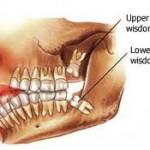
A person’s dentition comprises of a set of 32 healthy teeth. There are three molar tooth on each quadrant situated furthest back in the mouth used for chewing food making it 36 in total. Wisdom tooth is an individual’s third molar. The third molars erupt behind the second molars. The eruption process takes place around 18-24 years of age hence the name but can also erupt at a later age or remain absent. Incidence of at least one impacted wisdom tooth is high. They are classified according to their alignment in the jaw as horizontal, vertical, mesioangular or distoangular. Early detection of wisdom tooth impaction can be done with an X-ray taken periodically to evaluate the position of the tooth. Even in absence of any problem, early removal is recommended to avoid further problems in future as the roots are not fully formed and bone is less dense. Healing time and recovery is delayed in older individuals. Your dentist will apply pressure around the gumline to determine is the tooth is coming in successfully. Continue reading