Category Archives: Oral Care

Abscess tooth, How Does a Dentist Drain it ?

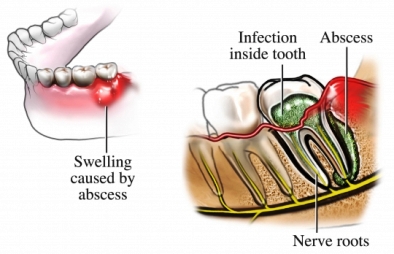
tooth abscessSo what is an abscess tooth

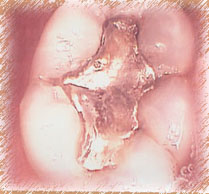
An abscess tooth is actually termed an odontogenic (tooth)  infection. A abscess tooth usually starts as a result of a decayed tooth, the decay which contains bacteria slowly eats away at the tooth and breaks down its structure. Soon enough the bacteria will progress deep enough into the nerves and blood vessels of the tooth termed the pulp of the tooth. Once inside it will start to spread like how a normal infection spreads when a gaping open wound is left untreated. The infection will slowly tract inside the pulp chamber of the tooth and cause the pulp of the tooth to die and become abscessed. This abscess tooth or pus will eventually tract and spread to infect the jaw bone. Clinically an abscess is a thick walled cavity pus. It is well localized or confined in the thick wall of the jaw bone or gum tissue.

Continue reading

Things Not to Drink with Braces

Beverages to be avoided when having braces on!!

Orthodontic treatment is common in both children and adults. They type of treatment and appliance advocated may vary from patient to patient, but majority of them treated wear fixed appliances for a certain period of time. Therefore, it is necessary to make some diet modifications to protect the braces as well as to ensure the health of the tissues in the mouth. It is wise to avoid or eliminate a list of beverages for this very reason. Continue reading

How to Replace Silver Dental Fillings

Transition from an old silver filling to a new one…

What is a silver dental filling?

amalgam filling

“Silver” dental fillings or commonly known as amalgam fillings contain 50% mercury, silver, tin, zinc and copper. It is inexpensive, easy to use and manipulate during placement into cavities as it is soft, moisture tolerant, less technique sensitive and forms a hard material on set. Amalgam has greater longevity as long as 10 years or more compared to other restorative materials and is wear resistant. Amalgam is condensed and packed into prepared cavities. They lack the bonding mechanism when compared to bonded fillings which restore 85% of strength that the tooth had before the first filling. Continue reading

Important Vitamins and Minerals for Dental Health

One of the very important and essential factors to good oral health is the intake of proper nutrition and diet. Nutritional problems can manifests when there is inadequate dietary intake of a nutrient, which can affect our entire body including our dental health. Continue reading

Which Vitamins are essential to cure Gingivitis and reverse its damage

Vitamins and minerals play an important role in our growth and development. If any of the vitamins are deficient, we may develop a deficiency disease which might cause permanent harm to our bodies.  Besides providing essential nutrients to maintain healthy cells in our bodies, vitamins may also be used to prevent or, to some extent, reverse the damages cause by gingivitis. Continue reading

How to Clean a Temporary Tooth Crown?

© Orangevale Dentistry

Crowning or “capping” is a dental procedure which involves reducing the entire surface of the tooth and replacing the surface with an artificial material. During the crown procedure, there will be a stage whereby you will be given a temporary tooth crown to wear while waiting for the actual crown to be made. Continue reading

How to stop snoring using a mandibular advancement splints

Snoring can be a very serious problem

Snoring is a common issue that plagues most household and can cause a string of other problems. It not only affects the sleep, hence the health of the bed partner, it is also an indication of poor health of the affected individual. Snoring is usually a sign of some form of obstruction in the airways leading to aspiration of air predominantly through the oral cavity. Hence individuals who snore are usually mouth breathers and can wake up in the morning with extremely dry mouth and halitosis or bad breath.

What is snoring related to?

Snoring can be an indication of a condition known as obstructive sleep apnea. Obstructive sleep apnea is a sleeping disorder where the affected individual can have significant narrowing of the airways leading to difficulty breathing. It is typically characterized with frequent pauses in breathing and the duration of each pause ranges from seconds to minutes. The frequency and duration is important in terms of determining the severity of condition as the more frequent and longer the duration of each pause, the more severe it is. Continue reading

When Should a Toddler Go to the Dentist

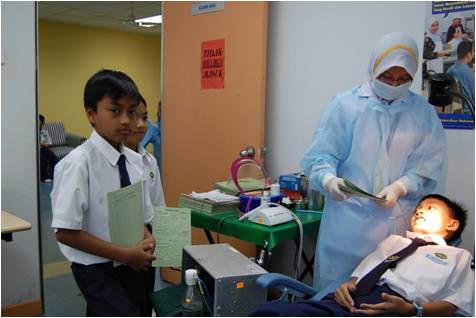
school dental service provided by the MDA. Treatments are carried out by the dental nurse

In Malaysia, we are blessed for we are given free dental services in the primary and secondary schools nationwide by the Malaysian Dental Association (MDA). Due to the expensive charges from private dentists, and the long waiting line in government dental clinics, many parents are very reluctant to bring their children to see the dentist. Some of parents could not even afford it. Most of the parents have the concept that, milk teeth (the baby’s first set of teeth) are going to fall out sooner or later, so they are not important at all. This is not true, as poorly taken care of milk teeth will lead to many problems in the future, and in some circumstances, will negatively affect the permanent teeth. Continue reading

How to stop bone loss in teeth naturally

What does it mean by dental bone loss?

Bone loss

For our convenience, the term bone loss is differentiated to two types in our mouth.  The loss of bone specifically involving jaw (alveolar) bone area but are not involving teeth is referred as dental bone loss. Meanwhile, teeth bone loss means loss of roots of teeth or the jaw bone surrounding teeth. At times, it is possible to have both bone loss happening simultaneously. Continue reading

How to avoid scaling and root planing scam

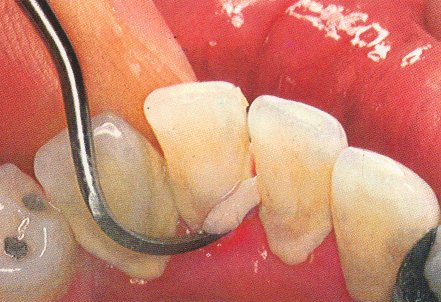
picture credit to dentalexcellence.co.nz

Scaling? Root planing ? These are everyday dental terms which sort of sound like something used in the field of engineering or construction. To a certain extent, there seems to be a muddle up of understanding about these two terms, what they are, and why they are even needed. This article aims to clear up the air of confusion.

Like nearly all dental problems it all originates from plaque. Plaque is a soft sticky bio-film formed by bacteria which is rather easily cleaned through the use thorough and proper tooth brushing habits. However, should plaque be allowed to build up (due to improper tooth brushing technique or total neglect of oral hygiene.) it may take up trace minerals in ordinary salivary and harden to form what is known as dental calculus, a tenacious solid mass which is nearly impossible to remove through tooth brushing. Without removal of these substances, you are opening the door to gum infection, tooth loss and even serious internal diseases.

Continue reading