
Bad Breath © mercola.com
Bad breath, or also known as halitosis, is a common complaint among adults and you may have experienced it sometime in your life. In most cases, having bad breath is not serious but it can significantly affect your personal and social life by causing embarrassment and self-consciousness. However having bad breath can also be a sign of a more serious underlying problem.
Reasons for bad breath
- Oral malodor is common on awakening from sleep as what we commonly call as ‘morning breath’. Saliva helps cleanse and moisten our mouth. The low salivary flow in the mouth while we are asleep lead to dry mouth and causes our mouths to smell in the morning. Dry mouth is even more of a problem if you sleep with your mouth open or breathe through your mouth. However morning breath can be easily rectified by eating, oral cleansing and rinsing your mouth with fresh water.

Avoid odorous food © TresSugar
- Bad breath is often the consequence of food or beverages consumed (such as garlic, onion, cabbage, spices). The breakdown of food particles in your teeth and the digestion of food with volatile oils can cause foul odor.
- Habits such as mouth breathing, smoking and drinking alcohol can cause bad breath as well. Smoking dries out your mouth and tobacco users are more likely to have periodontal disease, another source of bad breath.
- Bacterial activity in the mouth is the most frequent culprit of bad breath. Caused by organisms from poor oral hygiene, unclean dentures, gum or periodontal diseases, abscessed tooth, impacted tooth, infected tooth sockets after extraction, debris under bridge or appliances, ulcers and dry mouth; it could also lead to sore gums in the end. The tongue is the most common location of many organisms that lead to bad breath but bacteria can also be found in other parts of the mouth.
- If bad breath is not due to oral infection, it can be caused by:
- Starvation or severe dieting which is probably due to oral stagnation and ketoacidosis, the breakdown of chemicals during fasting.
- Usage of drugs like choral hydrate and insulin injection.
- Foreign body in the nose, usually in children. A small item stuck in the nose can cause persistent nasal discharge and foul odor.
- Systemic diseases like chronic lung infections and lung abscesses can produce very foul-smelling breath, kidney failure can cause urine-like odor, liver failure may cause a ‘fishy’ odor and people with uncontrolled diabetes often have a fruity breath odor. Acid reflux from the stomach (gastroesophageal reflux disease or GERD) can also produce bad breath.
- Psychogenic or psychosomatic factors, known as halitophobia, self-halitosis, delusional halitosis, or as a manifestation of Olfactory Reference Syndrome. Some misinterpret other people’s behavior or perceived behavior that people are avoiding them due to bad breath. The affected people then believes it to an extent that they adapt their behavior to minimize the perceived problem by covering their mouth when they speak, avoid crowds, use chewing gums and mouth sprays when they do not have bad breath at all.
How to detect bad breath
A simple home method for bad breath test is by licking the back of the wrist, let the saliva dry for a minute or two, and smell the result but it is not accurate for each person perceives smell differently. You can ask your spouse, family member, or close friend to give you an honest opinion and seek professional help. There are several laboratorial methods for diagnosis of bad breath including a halimeter is used to measure volatile sulphur compounds and BANA (benzoyl-arginine-naphthyl-amide) test or dark field microscopy to check the bacteria in the mouth.
Bad breath treatment
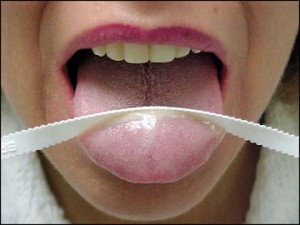
Use a tongue scraper
Use a tongue scraper
- Treat any identifiable cause for bad breath by visiting your doctor or dentist.
- Have regular meals.
- Avoid food that can produce odor (cabbage, raddish, onion, garlic, spices, durian etc.).
- Change habits that can worsen odor.
- Eat fresh fruits regularly like pineapple which has enzymes that clean the mouth.
- Brush your teeth after eating.
- Keep a good oral hygiene by tooth brushing, flossing, tongue cleaning, using mouthwash and have regular visits to your dentist.
- Brush your tongue before going to bed using a tongue scraper.
- Denture wearers should leave their denture out of their mouth at night and soak in water, hypochloride or chlorhexidine after cleaning.
- Keep mouth as moist as possible by drinking water regularly and use sugar-free chewing gums to stimulate saliva.
Some natural cure for bad breath like using apple cider vinegar or tea tree oil as a mouthwash, chewing mint leaves and gargling frequently with lemon juice might be useful to some but the steps mentioned above should provide relief for most people.
Pingback: Tweets that mention 10 Ways to Stop Bad Breath | Intelligent Dental -- Topsy.com
Pingback: Causes of Sore Gums | Intelligent Dental
Pingback: Avoiding Trench Mouth | Intelligent Dental
Pingback: Everything you need to know about denture | Intelligent Dental
Pingback: Does Mouth Wash really work? | Intelligent Dental
Pingback: How to Make Your Own Mouthwash | Intelligent Dental
Pingback: How does dry mouth causes fatigue | Intelligent Dental
Broken or cracked fillings can also cause bad breath. This is due to bacteria dying or residing inside the decaying tooth or underneath the filling. Once you’ve exhausted all of the options above, consult your dentist if your bad breath symptoms continue.
Pingback: Got A Hairy Tongue? | Intelligent Dental
Pingback: How to Make Your Own Mouthwash Part2 | Intelligent Dental
Pingback: Which is the Best Mouthwash for Gingivitis? | Intelligent Dental
Pingback: Why is Oral Health so Important? | Intelligent Dental
Pingback: Chronic Adult Periodontitis: Cause and Symptoms | Intelligent Dental
Pingback: How Diabetes Can Affect Your Oral Health Part 2 | Intelligent Dental
Pingback: Oral Health Pt 3: Importance of saliva | Intelligent Dental
Pingback: Why is there Bad Breath after Tonsillectomy? | Intelligent Dental
Pingback: How to Clean a Baby's Tongue | Intelligent Dental
Pingback: How to Recognize Gingivitis Symptoms | Intelligent Dental
Pingback: How to stop snoring using a mandibular advancement splints | Intelligent Dental
halitosis or bad breath can be combated by using those moutwashes or gargles with antibacterials like hexetidine`”
Pingback: Wisdom Tooth Nerve Pain | Intelligent Dental
Pingback: How to make a Herbal Gargle to Cure Gingivitis | Intelligent Dental