Continuation of Part 1
© get-health-smart.com
© get-health-smart.com
A visit to the dentist
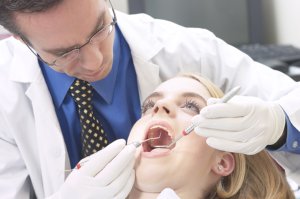
Every dental office will treat anyone having diabetes mellitus (DM). On your first visit, you will be asked to fill out a personal medical and dental history for the use of the dentist. Any critical information pertaining to diabetes should be added to the medical and dental history record, which would include information on dosage, time schedules, method of administration, previous adverse experiences with insulin control, number of hospitalizations, and physician recommendations. A good rapport with your dentist is necessary to treat any complications in your mouth.
Your dentist will then carefully explain the relationship between diabetes and periodontal disease (which affects the gums and surrounding supporting tissues). It is important to know that there will be many visits to the dentist for prevention, monitoring and possible periodontal treatment, that in turn will help maintain metabolic balance in the medical treatment.

© DentalPlans.com
If you smoke or use smokeless tobacco, your dentist would advise you to stop so that periodontal health can be maintained. It is meaningless and ridiculous for the dentist to treat a disease, if at the same time you are practicing a habit that is blocking the effect of the treatment. Furthermore if smoking continues, there is an increased risk for heart disease, which is one of the serious consequences of diabetes mellitus.
Appointments will be brief to minimize anxiety and stress and avoid interference with medication and meal or snack schedule. Emotional stress induced by a dental appointment can cause the release of epinephrine, a hormone which mobilizes glucose from glucagon stored in the liver. Stress, therefore can contribute to a hyperglycemic condition becoming ketoacidotic.
Morning appointments, especially an hour to an hour and a half after breakfast, are ideal because most people with diabetes are under best control at this time and the peak action time of medication can be avoided . Regular (fast-acting) insulin is often taken in the morning or at each meal and it peaks within 2-3 hours after the injection. Unlike injected insulin, oral hypoglycemic agents do not cause peaks.
Try to carry a supply of fast acting carbohydrate agents of your choice – glucose tablets or gel, candy, or juice in case there is a hypoglycemic emergency, whereby there is an unexpected drop in the blood glucose level. This is manifest by the individual feeling weak, exhibiting mood changes, lack of clarity, sweating, and having a rapid heartbeat.
Clinical signs and symptoms of diabetes mellitus in the mouth
Salivary and oral changes
© Katie Tegtmeyer, Flickr.com
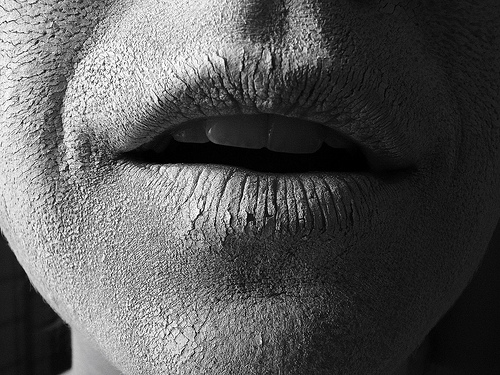
1. Dry mouth
– caused by increased fluid loss or dehydration
2. Swelling of the cheeks on both sides with increased thickness of saliva
– caused by swelling of the salivary glands, increased fatty acid deposition, increased salivary glucose levels or compensatory enlargement of the salivary gland due to decrease in saliva production
3. Increased tooth decay
– caused by dry mouth
4. Unexplained tooth pain and sensitive teeth
–caused by abnormalities in the structure and function of blood vessels (microangiopathy)
5. Erosion on the inner sides of the front teeth
– caused by complications of anorexia nervosa and bulimia
Periodontal changes
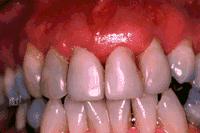
Advanced Periodontitis © PIC
1. Periodontal or gum diseases
–caused by accumulation of advanced glycation end products (AGE)
2. Tooth mobility
– as of above
3. Rapidly progressive pocket formation in the gums
– caused by chronic blood vessels changes
4. Bleeding of the gums
– caused by microangiopathies, local factors for example plaque
5. Yellow, soft, rapidly forming tartar
–caused by local factors, decreased inflammatory cells
6. Growths beneath the gums
–unknown cause
Infection and wound healing
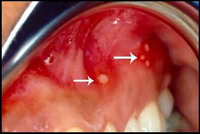
Aphthous ulcer © Kementerian Kesihatan, MALAYSIA
1. Slow wound healing and increased risk of infection
– caused by hyperglycemia which reduces inflammatory cells activity, blood vessel  changes lead to decreased blood flow, or abnormal collagen production
2. Ulcers in the mouth
3. Increased incidence and prolonged healing of dry socket
–caused by chronic blood vessel changes and post extraction infection
Tongue changes
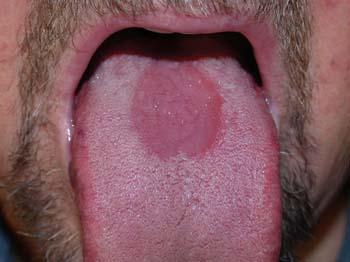
Median rhomboid glossitis © skinandaging.com
1. Pain in the tongue
–caused by complications in the nerves, dry mouth or fungal infection
2. Flabby tongue and indented lateral borders of the tongue
–caused by nerve disorder leading to decreased muscle tone of tongue
3. Median rhomboid glossitis (rhomboid shaped redness on the tongue)
–caused by Candida albicans infection
Other changes in the mouth
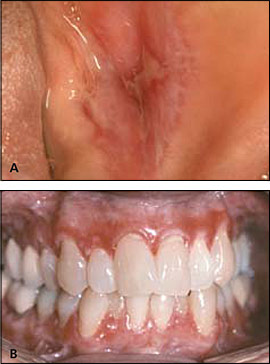
Lichen planus © www.aafp.org
1. Opportunistic infections, for example by Candida albicans (thrush) and mucormycosis (fungal infection originating in the paranasal sinuses and nose)
– caused by repeated use of antibiotics or a compromised immune system
2. Acetone or diabetes bad breath
–caused by ketoacidotic state, the breakdown of chemicals during fasting.
3. Increased incidence of lichen planus
– Diabetes mellitus, hypertension and lichen planus have been called the Grinspan syndrome, may also result from the use of chlorpropamide and some other anti-diabetic agents
4. Numbness, burning or pain in oral tissues
To be continued in Part 3
Pingback: Tweets that mention How Diabetes Can Affect Your Oral Health Part 2 | Intelligent Dental -- Topsy.com
Pingback: How Diabetes Can Affect Your Oral Health Part 3 | Intelligent Dental