Continued from Part 1
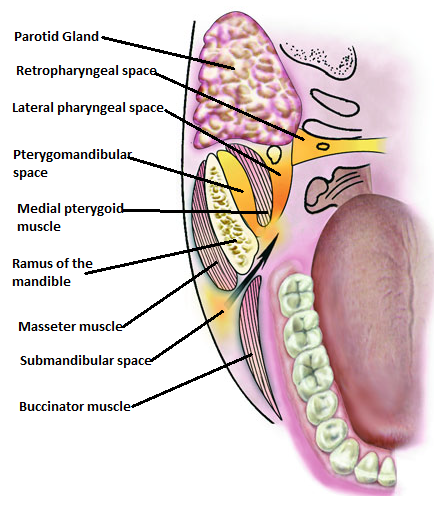
Pterygomandibular Abscess 250x300 Dangers of an Abscessed Tooth Part 2

© dentistryandmedicine.blogspot.com


  • Abscesses in the molar region of either jaw may penetrate the buccal cortical plate above (in the upper jaw) or below (in the lower jaw) the attachments of the buccinators muscle (A muscle that flattens the cheek and retracts the angle of the mouth). In such acute inflammatory edema and pus discharge spread into the soft tissues of the face or neck. This may present as a cellulitis or less frequently as a localized soft tissue abscess depending on the nature of the infection. Such an abscess may track towards the overlying skin to discharge through a sinus on the skin surface. The abscess may then become chronic with the sinus discharging pus periodically, associated with increasing fibrosis, scarring and disfigurement. Continue reading
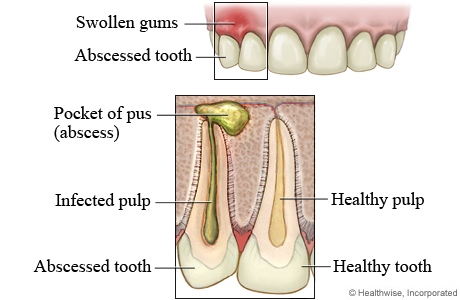
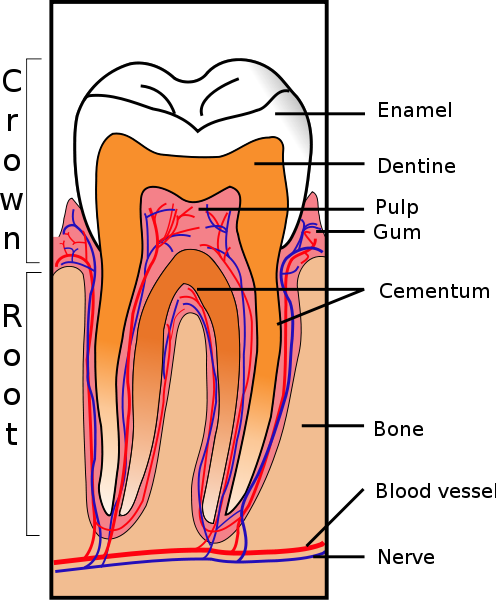
496px Tooth Section.svg  Dental Infection Caused by Root Canal

Structures of the tooth

Dental infections commonly arise from a tooth problem but can also be related to the surrounding periodontium which are supporting structures of the teeth. Keeping the periodontal structures aside, there are many reasons as to how a tooth can cause dental infections. Dental infections should not be underestimated as it can affect the rest of the head and also the neck region, leading to complications, which if left untreated, is potentially life threatening. There has been many cases demonstrated worldwide where dental infections that were not managed properly has lead to death, hence they should be taken seriously. Dental infections are very easily manageable when they are well localised and it is only until when they are allowed to spread through to other structures that a serious problem can arise. It is of utmost importance at any sign or symptom of dental infection, it is checked out by a competent dentist. And in the case of root canal related dental infections, the offending tooth is identified. Continue reading