Category Archives: Oral Care

Home Remedies for Teeth Whitening

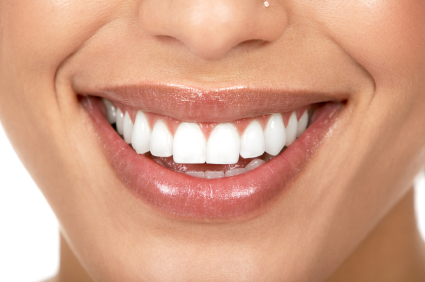
Do you wish to have those pearly white teeth?

Whitening dental products and professional whitening treatments can usually guarantee you a satisfactory result. However, these products and treatments can also cost you a fortune.  In this article, I would like to share with you a few home remedies that can be used to whiten your teeth.

(Please consult a dentist or physician before starting any of these home remedies)

  Continue reading

Foods for Good Teeth and Gums Part 1

Diet, nutrition and oral health are closely linked. Nutrition is an essential for the growth, development, and maintenance of structures and tissues in the mouth. During periods of rapid cell growth, there can be an irreversible effect on the developing oral tissues if any nutrition deficiency is present. Prior to tooth eruption in the mouth, nutritional status can influence tooth enamel maturation and chemical composition as well as tooth shape and size. Early malnutrition increases a child’s risk to tooth decay in the baby teeth.Throughout life, nutritional deficiencies or toxicities can affect host resistance, healing, oral function, and oral-tissue integrity. Continue reading

About Hydro floss Oral Irrigator

What is Hydro floss oral irrigator?

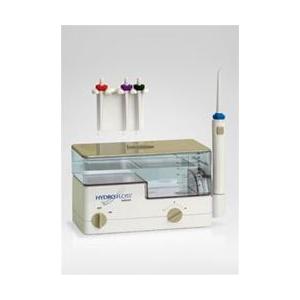
Thе Hydro Floss Oral Irrigator іѕ a dental care system thаt can be used at home. It uses a flow οf water tο irrigate thе spaces between уουr teeth аnd gums that may have been missed by regular brushing and flossing.

The Hydro Floss Oral Irrigator

Continue reading

Healing Dental Implant Surgery with PRP

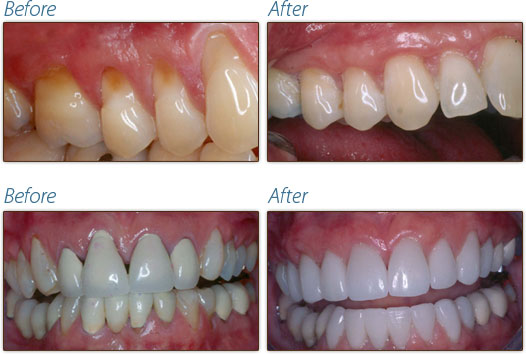
Connective tissue graft allowed to reestablish the gingival contour and architecture

Grafting has been used in Periodontal therapy and implants as a mean to reestablish the loss periodontal apparatus (alveolar bone, periodontal ligament, and cementum). Connective tissue graft also allowed to reestablish the gingival contour and architecture for the harmony and esthetic of the smile. In the past, these procedures can be enhanced by the use of membrane as the physical barrier to prevent epithelial and tissue migration in the graft site which may lead to contact inhibition of bone cell migration. Today, another breakthrough in the surgical procedure is the use of autologous platelet rich plasma (PRP) to improve surgical outcomes by accelerating the body’s natural healing process. Continue reading

How to Clean and Reduce Plaque With Saliva

© causessymptomsandtreatments.com

Saliva is a complex fluid found in the mouth consisting of a mixture of secretions from the major salivary glands and the minor glands of the tissues in the mouth. Majority of saliva is produced by the three pairs of major glands – the parotid, submandibular, and sublingual glands. The rest of it is produced by thousands of minor salivary glands distributed throughout the mouth and throat. Continue reading

How to Choose a Toothbrush

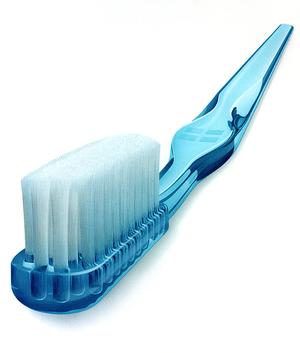
What influences you to choose your present/last tooth brush? Did you purchase your last tooth brush based on its design, color or simply by its brand? In fact, choosing a correct tooth brush is an important step in keeping your teeth healthy and plaque-free.

Continue reading

How do I Preserve Toothbrushes?

Taking proper care of toothbrushes is an important part of dental hygiene and leads to better oral health and a longer-lasting toothbrush. Today, toothbrushes are so much part of everyday life that most people do not give much thought to how they’re used. Just brush and forget about them. But consider that people put these dental implements in their mouths twice a day, every day, and it becomes clear that taking care of toothbrushes becomes an important part of oral hygiene. Continue reading

How to Care for a Dental Retainer

Why do we need to wear retainers?

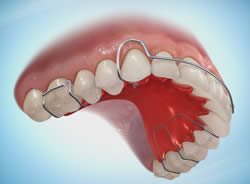
Orthodontic retainers are worn after orthodontic treatment to provide retention and to ensure that our teeth are stabilized in their desired position. It is a very important phase of orthodontic treatment as teeth can relapse to its original position if there is no retention. Continue reading

Flying With an Abscessed Tooth

Illness during a flight may lead to an unscheduled landing

Illness during a flight may lead to an unscheduled landing. This is expensive for the airline and extremely inconvenient for other passengers. There are relatively few situations where travel by flight is not allowed, and having a tooth abscess is one of them. Although the pain might not be so severe to the stage where the aircraft would have to do a force landing, however, different people have different level for tolerance of pain. So it is generally unwise to deliberately fly with a known tooth abscess in the mouth.

Most people are aware that the air gets thinner, providing less oxygen the higher you go. To help deal with this, commercial aircraft are pressurised to the equivalent of an altitude of 1500-2000m. This still results in a relatively small fall in oxygen saturation of the order of 3-5%, which may be significant for travellers whose oxygenation is already compromised by severe cardiac/respiratory disease. In practical terms, people with severe heart or lung disease who can walk 50m on level ground or ascend a flight of 12 domestic stairs are probably fit to fly. Continue reading