Category Archives: Oral Care

Toothbrushing Basics

© Be Yourself Beautiful

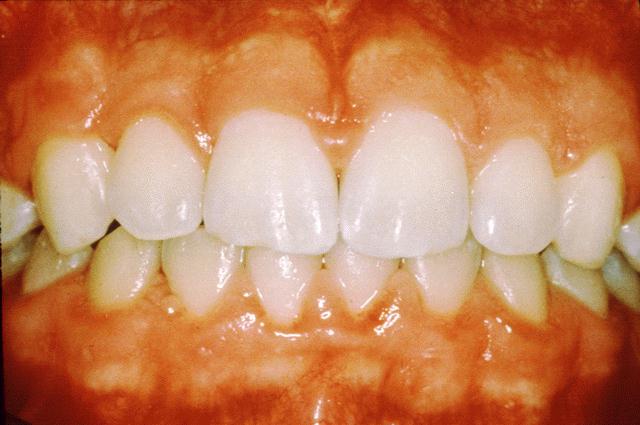
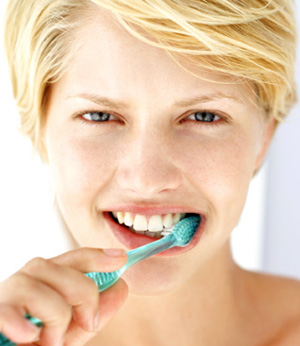
Various methods of tooth brushing have been recommended and classified to the type of motion performed by the brush. In reality it does not matter exactly how a toothbrush is used, as long as plaque is effectively removed without trauma to the gums. Where plaque still persists, the dental professional should teach effective oral hygiene. The recommended toothbrushing method will depend upon the dexterity of the individual as well as the position of the teeth. The vibratory Bass technique is the most useful and will be described in detail. Continue reading
Fear of Dentists (No more!) – Part 1

What is the first thing that comes to mind at the mention of a dentist? Does it send shrills down your spine as you start imagining long needles and sharp probes and high-speed drills all in your mouth at once, cutting into your teeth while tied down to the dental chair? Or is it like a leisurely stroll to the park that you take every once in awhile and you absolutely look forward to each visit? If it’s the latter, congratulations, you’re a rare species! But if it’s the former, and you can clearly remember how you so often had to cling onto the staircase railings so as not be dragged to the dentist’s when you were young, then you most probably have the dental phobia/dentophobia, or fear of dentists. Some people suffer from such a condition to a greater degree than others. It can be any one of the following:

Continue reading

ADA Sealant Coating Specifications

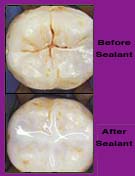
Sealants are essential to prohibiting the harmful expansion of tooth pits

The American Dental Association (ADA) investigates and analyzes all professional aspects of the dental profession, including tooth sealants. According to the ADA website, sealants are essential to prohibiting the harmful expansion of tooth pits, breakages and decay in adults and children. Specifically, studies indicate that dental work of nearly one in three American children between the ages of six and 19 years have undergone sealant coating. The likelihood of developing pit and fissure decay begins early in life, so children and teenagers are obvious candidates for dental sealant application. But adults can benefit from sealants as well. Continue reading

Do Electric Toothbrushes Really Work Better Than Regular Ones?

© oralb.com

In most developed countries, the number of powered or electric toothbrush products sold has increased dramatically in recent years. An electric toothbrush is a toothbrush usually powered by a battery to move the brush head. Most modern electric toothbrushes have a small, circular head which performs oscillating (having periodic vibrations), rotating or counter-rotational movements. Some models have timers which give useful feedback to the user on the time spent on brushing. Continue reading

How to Brush Your Teeth with Tooth Soap

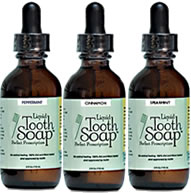
Tooth soap in liquid form

Tooth soap is the product that replaces the usual toothpaste products with far more natural, gentle teeth-washing ingredients. Because let’s face it: You don’t actually need to “scrub” your teeth with sand, chemical preservatives and sweeteners. Some toothpaste products are quite harmful — they’re loaded with synthetic chemicals that simply can’t be considered safe for human consumption by any reasonable person. Cleaning your teeth only requires a type of soap, some water and some brushing action. You don’t need dyes, sweeteners, sand and other unnecessary ingredients. Continue reading

How to Reverse Decalcification

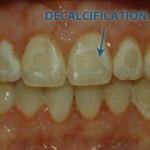
What is decalcification?

Decalcification simply means loss of calcium from teeth.

What causes decalcification of tooth enamel?

Bacteria found in dental plaque will convert carbohydrate and sugars into acids. This acidic condition will cause minerals to leach out from enamel. It is also known as decalcification. High-sugar diets, lack of good oral hygiene practices are the main factors that contribute to decalcification of tooth enamel. Continue reading

8 Signs your wisdom tooth needs to be removed

Third molars erupt in the mouth when a person reaches the age of 17-21 years, when most individuals become adults, hence the term “wisdom teeth”. However, not everyone has wisdom teeth, and not having one should not be a case for concern. According to medterm.com, 7.6% of the population does not have wisdom teeth all their life. On the other hand, some appear to not have them, but they are actually embedded within the jaw due to lack of space to erupt. Hence a visit to the dentist is essential to check whether your tooth is missing, or whether there are problems involved in its eruption like impaction and infection. Here are some reasons that indicate you should have your tooth pulled out: Continue reading

How to Clean Ceramic Teeth

The process of using ceramic materials to replace or repair teeth is not new. According to the Indiana University School of Dentistry, the first porcelain denture tooth was introduced in 1789. Of the materials used today for tooth restoration, ceramic porcelain comes closest to duplicating the color and translucency of natural teeth. Ceramic teeth are, however, more expensive than other materials and can add up to a major investment. Protect your investment and help your ceramic teeth last longer by cleaning them properly. Continue reading

7 Tips for Kids Teeth

Many people have the misconception that primary teeth are not as important as permanent teeth, as the former will eventually be replaced by the latter. This is not true, as primary teeth serve many different functions, some of which contribute to the health and aesthetics of the permanent dentition. For example, they play an important role in chewing food and maintaining space for the eruption of the permanent teeth. Also, like adults, children will feel better about themselves if they have a nice smile, which leads to the development of a social well-being as they grow up.
Caries spread faster in primary teeth because they have thinner enamel, hence it is important that dentition is well-attended to from a  young age. Here are some tips that you may find useful in caring for your child’s dentition: Continue reading