Category Archives: Oral Care

What to Know About Cleft Lip and Cleft Palate

© World Love and Peace Foundation

© World Love and Peace Foundation

Cleft lip and cleft palate are one of the common birth defects found in the United States and around the world. A cleft is an abnormal space or gap in the upper lip or palate that is present at birth. Cleft lip is also known as harelip to some.  The finding of a cleft deformity in an affected baby can be a considerable shock to the parents but be rest assured for the defects are correctable and the child’s future need not be adversely affected. However parents have to be mentally prepared for a long course of therapy to correct the cleft disfigurement. Continue reading
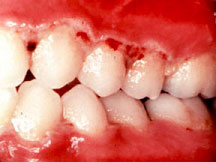
A guide of Herpes Gingivostomatitis for parents

What is herpes gingivostomatitis?

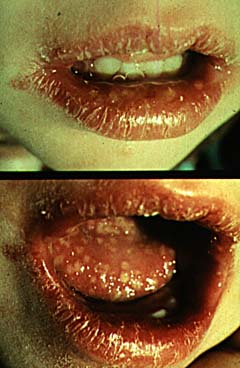
herpes gingivostomatitis.Image is taken from http://www.brown.edu/Courses/Bio_160/Projects2000/Herpes/HSV/Photos.html

herpetic gingivostomatitis picture.Image is taken from http://www.brown.edu/Courses/Bio_160/Projects2000/Herpes/HSV/Photos.html

Herpes gingivostomatitis is an infection of the mouth and lips that is caused by Herpes Simplex virus type I is a different kind of herpes virus than the kind that is sexually transmitted.

Herpes gingivostomatitis commonly present with mouth sores with fever in toddlers and young children (10 years of age with a peak incidence at 2-4 years of age). It is also seen in young adults, especially in more affluent communities (15 to 25 years of age).

Once an individual is infected, the virus spreads to regional mass of nerve tissue, where it remains latent but can be reactivated whenever conditions are appropriate (lack of antibody or immunocompromised condition).

How the diseases can be transmitted?

The infection is passed from person to person through contact with saliva that contains the virus (such as sharing utensils, cups, and bottles; thumb sucking; and putting toys in the mouth). Often the contact is with a person who has cold sores. Continue reading

Avoiding Trench Mouth

Acute necrotizing gingivitis © Too Smile Dentals

Acute necrotizing gingivitis © Too Smile Dentals

Trench mouth disease, or acute necrotizing ulcerative gingivitis (ANUG) in medical term, is a condition that affects the gums which as its name implies; destroy gum tissues, create sores and inflame the gums. When irreversible destruction of the periodontal tissues has occurred, it will be called as acute necrotizing ulcerative periodontitis (ANUP). The condition is best seen in patients with HIV infection and AIDS and it has been around since World War I (for many of the soldiers in the trenches were affected by it). It used to be called by many names like Vincent’s gingivitis, Vincent’s gingivostomatitis and ulceromembraneous gingivitis.

Continue reading

Teeth whitening strips

image taken from http://www.denta-solutions.net/dental/boca-raton-cosmetic-dentistry.php

image taken from http://www.denta-solutions.net/dental/boca-raton-cosmetic-dentistry.php

What are teeth whitening strips?

Teeth whitening strips are flexible thin strips of plastic that are coated with a tooth whitening gel containing bleaching agent. They work by keeping the whitening gel in place against your teeth to remove surface stains ,whiten teeth by deep cleaning and protect teeth from everyday stain buildup. The results can vary, and will be influenced by types of whitening strips used and your diet taken

Continue reading

Clean Denture Better with Ultrasonic Denture Cleaner

Ultrasonic denture cleaner

Cleaning dentures is not an easy task as they have small crevices and cracks that trap stains. If they are not properly cleaned sometimes tartar might build up as well. This is why you can try to clean your denture with an ultrasonic denture cleaner. Continue reading

Causes of Gum Swellings and Lumps Part2

Continued from Part1.

8)      Giant cell tumor

Giant Cell Tumor

Smooth-surfaced peripheral giant-cell granuloma

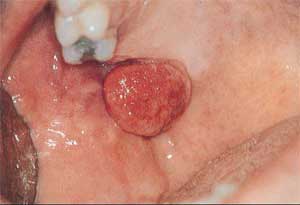
A giant cell tumor is one that is made up of a large number of benign (non-cancerous) cells that form an aggressive tumor. Also called peripheral giant cell granuloma, it usually forms as a response to trauma or some chronic inflammatory process.

Management: Surgical removal of tumor and removal of possible causative factors to avoid reoccurrence. Continue reading

Causes of Gum Swellings and Lumps Part1

Swollen Gums © periotherapy.com

Swollen Gums © periotherapy.com

Lumps and swelling in the mouth is common and easily detected by our tongue. Most would choose to ignore them but some would examine their mouths out of curiosity and some through fear (perhaps of the thought of ‘mouth cancer’). Many different conditions may present as oral lumps and swellings so try not to jump into any conclusions until you get a confirmation from your dentist.

Continue reading

Causes of Red, White or Pigmented Gums

Healthy gums © goodbreath4you.com

Healthy gums © goodbreath4you.com

Healthy gums are firm, pale pink, scalloped around each tooth with sharp knife edge ends in between the adjacent teeth. Although “coral pink” or “salmon pink” is the color indication for healthy gums in textbooks, racial pigmentation caused by melanin can make the gums appear darker. Mainly seen in African or Asian heritage, it can be seen in individuals of Mediterranean descent or even sometimes in light-skinned people. Due to the fact that gum color can vary between people, the uniformity of color is of more importance than the actual color itself. However if your gums are in other colors like red, white or black, they can indicate gum inflammation (gingivitis) or pathology. Continue reading

Types of denture cleansers and how to use them

Denture cleansers are also known as denture cleaners. They come in tablet, solution and wipes form. They are important in denture cleaning regime because they aid in cleaning tough stains which is hard to reach with normal brushing alone. Some denture cleansers claimed they can remove plaque, tartar and whiten the denture. Continue reading

Ways of caring for dentures

Denture care Picture taken from wednesdayabc.blogspot.com

Denture care Picture taken from wednesdayabc.blogspot.com

Denture is a plastic plate coupled with artificial teeth that you place inside your mouth to replace missing teeth. It is a removable item therefore stringent care is required to ensure its longevity.

How to care for dentures?

Do not wear denture to sleep.

  • Wearing denture the whole day results in constant pressure on your gums and oral mucosa.
  • Leaving it out allows your gums to return to its normal position and rest.
  • Without denture in place, the saliva is able to perform its antibacterial effect to maintain a good oral environment.
  • You are advised to leave your denture out when you are not using them. Continue reading