After discussing about exploring instruments, scaling instruments and restorative instruments, let’s move on to root canal instruments.
When the caries has extended to the pulp tissues, then you will need a root canal treatment. Continue reading
After discussing about exploring instruments, scaling instruments and restorative instruments, let’s move on to root canal instruments.
When the caries has extended to the pulp tissues, then you will need a root canal treatment. Continue reading
Dental models are three-dimensional reproductions of a patient’s teeth and gums, according to “Torres and Ehrlich Modern Dental Assisting.” Also called study casts, these models are valuable diagnostic tools for creating devices such as dentures or braces, or for making temporary crowns or mouth guards. Whatever the reason, making a permanent teeth model is easy to do, if you don’t mind having plaster in your mouth for a few minutes. You could do it yourself with a few pieces of equipment, or you could have your local dentist make a mold for you. It is painless and doesn’t take more than an hour to complete. With these models, the dentist can study a patient’s mouth at angles he or she cannot reach during a regular patient examination in the dental chair. Continue reading
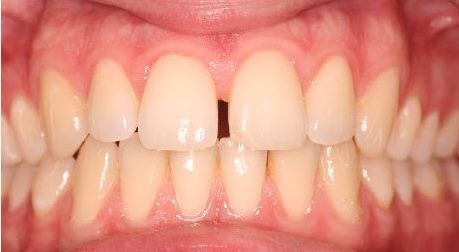
© Imagine Orthodontics
If you have a space between your upper front teeth like the photo shown above, it means that you are having midline diastema. In dental terms, midline diastema refers to an anterior midline spacing between the two maxillary central incisors. It is one of the most frequently seen malocclusions that is considered easy to treat but often difficult to retain. Continue reading
You don’t have to sweat when you exercise to know you’ve had a great workout. In fact, you don’t even have to feel like you’ve had a great workout to have a great workout. All you need to do to have a great workout is contract your muscles as much as possible. Continue reading
Odontology, the science of using dental information to identify a deceased person, began as early as the first century A.D. Since then, this field of study has grown to be recognized worldwide by organizations such as the American Board of Forensic Odontology. It is useful both in convicting criminals in court and in identifying victims of natural disasters. Continue reading
One of the most valuable and lasting improvements that any dentist can contribute to a successful practice is an investment in great office design. Whether remodeling an existing office or creating a brand new facility from scratch, there are several essential elements to focus on in designing an office that will help create a more productive, comfortable, quiet and user-friendly practice. There are many distinct styles of practice. Clearly, dental office design is an individual matter based on one’s needs and budget. Nevertheless, the following key issues are common to any office: esthetics; the empowerment of key personnel; controlling noise; and creating rapid access to key equipment and materials. Continue reading
Lasers have been used in dentistry since 1994 to treat a number of dental problems. But, despite FDA approval, no laser system has received the American Dental Association’s (ADA) Seal of Acceptance. That seal assures dentists that the product or device meets ADA standards of safety and efficacy, among other things. The ADA, however, states that it is cautiously optimistic about the role of laser technology in the field of dentistry. These lasers are different from the cold lasers used in phototherapy for the relief of headaches, pain, and inflammation. Continue reading
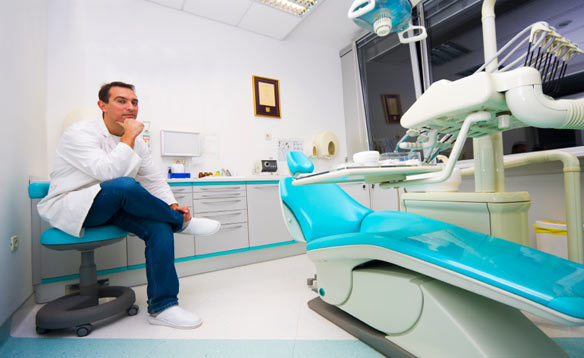
Cancelled appointments lead to wasted time and money.
Dental appointment cancellations are a major concern of most dental offices today. Cancelled appointments lead to wasted time and money. According to Dental-tribune.com even when the economy is doing well revenue losses can range from $40,000 to $60,000 per year. This value doesn’t include the potential money that could be earned if the patient did come to the appointment, and further treatments and procedures were needed. Often practice teams place the blame of failed appointments on the patients—their lack of respect for the dentist’s time, their lack of urgency of getting the dentistry done, and just plain rudeness. Although some of the responsibility rests with patients, a significant contributor to the problem is the dental team and the lack of training on communications skills that prevent failed appointments and how to effectively handle and “turn around†cancellation calls.  Minimizing cancellations can be done in numerous ways. Continue reading
We hear from a lot of denture wearers that tell us stories about having a lot of difficulty eating the foods that they want and need to eat, in speaking clearly, and with their appearance. To solve these problems, we use a more involved denture technique called the Branching Technique. The “branching technique,” taught first by Pound and later by Turbyfill and others, allows for extended treatment and management of more complex patient problems.  Less than 1% of dentists in the United States use this technique because of the great amount of training required to learn it, as well as more time spent on working with the patient. Continue reading
Dentures are sets of artificial teeth designed to fit inside the mouth. They are worn by people who no longer have their natural teeth. When natural teeth are removed, the jawbone begins to deteriorate. Over time, this affects the shape of the jaws, which can cause dentures to shift uncomfortably inside the mouth. To hold dentures in place, an adhesive can be placed along the inside of the prosthetic before insertion. This will hold the denture steady throughout the day, allowing the wearer to function with a higher degree of confidence and comfort. Continue reading