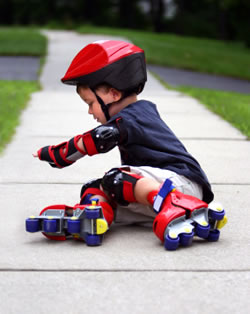
Sports injuries are a common thing especially among the young people. Contact or collision sports tend to inflict certain amount of injury to the body but this can be reduced with the use of protective equipments, such as a mouth guard. Continue reading
Dentine Bonding Agents
Dentine Bonding Agents:
These are agents used to aid the adhesion of restorative materials to dentine.
These are dental materials that adhere to tooth structure.
Theoretically, these agents allow more conservative approach to cavity preparation since reliance on a traditional restorative feature is reduced (Grooves and Slots)
What Are the Causes of Tartar on Human Teeth?
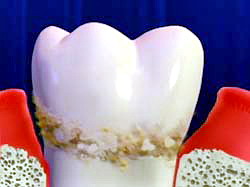
When you open your mouth while looking in the mirror, you noticed this crust-like thing stuck on the borders between your gums and teeth. No matter how hard you try, you cannot seem to remove it by yourself. This incrustation that forms on the teeth and gums is called teeth tartar, or known as dental calculus to the dental professionals. Continue reading
Full Veneer Crown
DEFINITION
According to the Glossary of Prosthodontic terms – 7
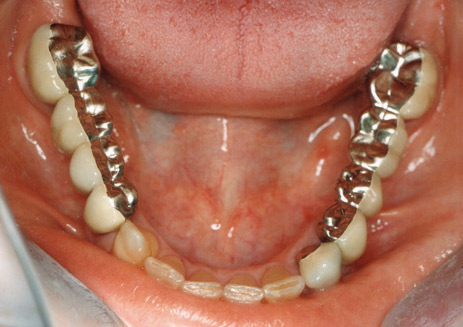
Full veneer crown is described as “A restoration that covers all the coronal tooth surfaces (Mesial, Distal, Facial, Lingual and Occlusal)â€
Difference between tooth abscess, cyst, and granuloma
Whenever a lesion is observed on a radiograph, it must first be described in general terms before a differential diagnosis is attempted. Is the lesion radiolucent, radiopaque, or mixed (combination of radiolucency and radiopacity)? Where is the lesion located? The apices of which teeth are involved? What is the size of the lesion? Is the margin of the lesion ill-defined, well-defined, or well-defined with a radiopaque border? Is the appearance of the bone surrounding the lesion: normal, porous, or sclerotic? Continue reading
Failures In Bridge/Fixed Partial Denture
FAILURES IN FIXED PARTIAL DENTURE
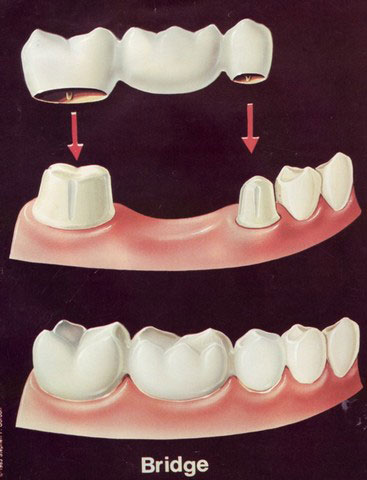
A bridge is a custom-made device anchored to neighboring natural teeth, which replaces one or more missing teeth. When a lost tooth is replaced with bridgework, the teeth on either side of the missing one are prepared as crowns to hold the bridge in place. Bridges, sometimes referred to as a fixed partial denture, look natural and literally bridge the gap where one or more teeth may have been. Fixed bridges appear and function similar to natural teeth.
Side effects of radiotherapy to the head and neck on the mouth
Â
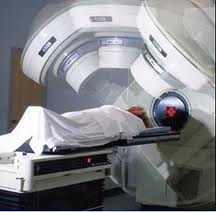
Radiotherapy is one of 3 treatment options that can be used to treat tumours, the other 2 being surgical removal and chemotherapy. Sometimes these therapies are used in combination with each other. There are many structures in the head and neck, therefore radiation to the head and neck area (could be due to oral, nose, skin etc cancers) can cause a multitude of complications as listed below: Continue reading
Bell’s palsy Part 2
Pathology
It is thought that as a result of inflammation of the facial nerve, pressure is produced on the nerve where it exits the skull within its bony canal, blocking the transmission of neural signals or damaging the nerve. Patients with facial palsy for which an underlying cause can be found are not considered to have Bell’s palsy per se. Possible causes include tumor, meningitis, stroke, diabetes mellitus, head trauma and inflammatory diseases of the cranial nerves (sarcoidosis, brucellosis, etc.). In these conditions, the neurologic findings are rarely restricted to the facial nerve. Babies can be born with facial palsy. In a few cases, bilateral facial palsy has been associated with acute HIV infection. Continue reading
About Recaldent
Demineralization and Remineralization
A tooth is made up of enamel, dentine, and the pulp. Enamel is the hardest part of the body, even harder than any bone in your body. This is because enamel is made up of 90% inorganic matter, consisting mainly of hydroxyapatite crystals, which are essentially made up of calcium and phosphate.
After meals, the bacteria in the mouth will break down sugar or carbohydrate left on teeth surface, producing acids which will then cause demineralization of the teeth surface, depleting it of calcium and phosphate. This process starts in enamel, and can progress to the dentine and eventually pulp, causing pulpitis. Continue reading
Bell’s palsy Part 1
Bell’s palsy is a form of facial paralysis resulting from a dysfunction of the cranial nerve VII (the facial nerve) that results in the inability to control facial muscles on the affected side. Several conditions can cause facial paralysis, e.g., brain tumor, stroke, and Lyme disease. However, if no specific cause can be identified, the condition is known as Bell’s palsy. Named after Scottish anatomist Charles Bell, who first described it, Bell’s palsy is the most common acute mononeuropathy (disease involving only one nerve) and is the most common cause of acute facial nerve paralysis. Continue reading