Desquamative gingivitis

Desquamative gingivitis is a cutaneous condition characterized by diffuse gingival erythema with varying degrees of mucosal sloughing and erosion.

A band of red atrophic or eroded mucosa affecting the attached gingiva is known as dequamative gingivitis. Unlike plaque-induced inflammation it is a dusky red colour and extends beyond the marginal gingiva, often to the full width of the attached gingiva and sometimes onto the alveolar mucosa. DG is more common in middle-aged to elderly females, is painful, affects the buccal/labial gingiva predominantly. Some reserve the term for cases where the epithelium blisters or peels while others use it whenever the characteristic red appearance is present. (Edward W. Odell, 2010) Continue reading

Causes of abnormal number of teeth in your/your child’s dentition-Part II

We have discussed hypodontia in the part I of this article. Here we will look at extra teeth in addition to those in the normal dentition.

Extra tooth

Hyperdontia

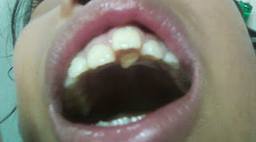
Hyperdontia, or supernumerary teeth, are teeth additional to those in the normal series. They can be found anywhere in the tooth-bearing region. They are most commonly found in the upper front tooth region, followed by the lower back tooth region. Just like hypodontia, they can  be present on both sides (right and left sides) of the dentition. Hence, when there is a supernumerary tooth on one side of the jaw, a dentist would check for the possibility of a supernumerary tooth on the other side as well. Continue reading

Causes of abnormal number of teeth in your/your child’s dentition

A typical human being has 20 deciduous (or milk, primary) teeth, consisting of 4 incisors, 2 canines, and 2 molars in each jaw (upper and lower). This is followed by the permanent dentition (or secondary dentition), which consists of 4 incisors, 2 canines, 4 premolars, and 6 molars in each jaw, making up a total of 32teeth in a typical adult.
hypodontia

Hypodontia
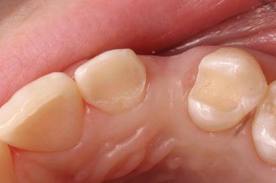
If a person has less than 20 deciduous teeth or 32 permanent teeth (not including those that has been extracted or those that are impacted), the condition is termed “hypodontia”, or “oligodontia”. If there is complete absence of teeth in one or both dentitions, it is called “anodontia”. Hypodontia is: Continue reading

How to Remove Plaque

© loungecliniclebanon.com

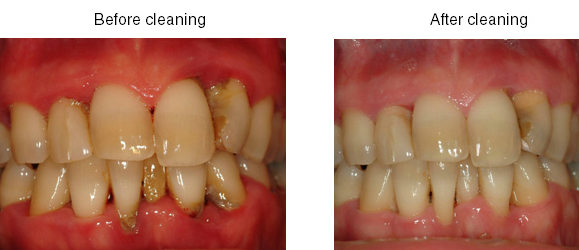
Dental plaque is an adherent deposit of bacteria and their products, which forms on all tooth surfaces. The bacteria in teeth plaque react with foods we eat to produce acids that can attack and weaken tooth enamel (the hard, protective covering on our teeth), opening the way for cavities (dental caries) to develop as well as irritate the gums, leading to gum disease. Therefore it is important that plaque removal be done to keep our mouths healthy. Continue reading

Oral herpes Part 1

Oral herpes is an infection of the mouth and lips caused by the herpes simplex virus (also termed HSV). The virus causes painful sores on lips, gums, tongue, roof of the mouth, and inside the cheeks and sometimes on the face and neck. It also can cause symptoms such as fever and muscle aches. People commonly refer to the infection as “cold sores.” Another condition, “canker sore,” is often thought to be caused by HSV, but this is not true. Canker sores occur only inside the mouth, on the tongue and on the soft palate (roof of mouth), not on skin surfaces. Although they reoccur, they are not contagious, usually are self-limiting, and have almost no complications. Canker sores are caused by substances that irritate the oral mucosa. Continue reading

How Does Plaque Affect the Teeth?

© beauty.dzonehub.com

Bacteria in dental plaque are the direct cause of the most widespread of all human diseases – dental cavities and inflammatory gum or periodontal diseases. These diseases, however, are not classical infections. They arise because of complex changes in plaque ecology and are affected by many factors in the host’s protective responses. Continue reading