LEAD
The K-absorption edge for lead occurs at 88kev
so that the photons whose energies lie between 60 and 88 kev are much less attenuated than those between 88 and 110 kev
with a net result that more soft radiation than is desirable is transmitted and the high energy photons are excessively removed
Monthly Archives: January 2012
Drug Induced Gingival Enlargement
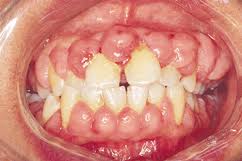 Drug induced gingival hyperplasia is one of the common causes of gingival enlargement. Â
There are three types of drugs highly associated with gingival hyperplasia/enlargement :
1) Antiepileptic drug (Phenytoin)
 2) Immunosuppressive drug (cyclosporine) and 3) calcium-channel blocking drug (nifedipine).
Phenytoin is usually prescribed for the treatment of seizures where as calcium channel blocking drugs are used to treat heart diseases, angina and hypertension.
 The incidence of gingival enlargement is lower in patients who are taking cyclosporine compared to patients who are on phenytoin (Approximately 50 % of patients have gingival overgrowth). However, it can be very severe (covers the entire surface of teeth) when gingival enlargement occurs in patients who are taking cyclosporine. Continue reading
Common anticoagulants and antiplatlets in dentristry
Warfarin
When deciding the appropriate management of a dental patient prescribed warfarin, three questions must be answered: (1) why is the patient on warfarin? (2) is it necessary to modify the warfarin regimen? And (3) how should the regimen be modified? Continue reading
Radiographic Accessories Part 4
PRINCIPLES IN CHOOSING A FILTER MATERIAL
The material chosen must attenuate principally by means of photoelectric effect in the photon energy range being dealt with in order to discriminate against low energy photons
The material must not have an absorption edge close to the energies of the photons that it is desired to use
The thickness of the material must not be too small – it should be uniform
Too thin might produce pin holes which might produce completely unfiltered beams